Learning Outcomes:
i. Define stomata and palisade tissue and explain their location in plant leaves.
ii. Describe the structure and function of stomata, including the role of guard cells in regulating gas exchange.
iii. Explain the role of palisade tissue in photosynthesis, highlighting its specialized structure for efficient light absorption.
iv. Discuss the relationship between stomata, palisade tissue, and the overall process of gas exchange in plants.
v. Analyze how environmental factors can affect the opening and closing of stomata and the rate of gas exchange in plants.
i. Leaves: The Powerhouses of Plants
Leaves are the primary organs of photosynthesis, the process by which plants convert light energy into chemical energy in the form of glucose. Photosynthesis requires carbon dioxide from the atmosphere and water from the soil, and it releases oxygen as a byproduct. However, leaves also need to release excess water vapor and oxygen, and they do this through tiny pores called stomata.
ii. Stomata: Gates to the Atmosphere
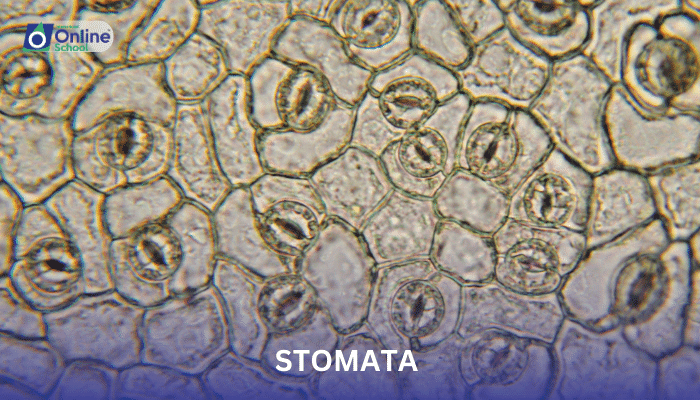
Stomata are microscopic pores found on the underside of leaves and some other plant organs. They are surrounded by specialized guard cells that control their opening and closing. When guard cells are turgid, they swell and open the stomata, allowing gases to exchange between the leaf and the atmosphere.
Structure of guard cells: Guard cells are kidney-shaped cells with unique characteristics that allow them to regulate stomatal aperture. They have thick walls with uneven distribution of cellulose microfibrils, allowing them to change shape in response to changes in turgor pressure.
Regulation of stomatal opening and closing: Guard cells are sensitive to various environmental factors, including light, carbon dioxide concentration, and water availability. When light levels are high and carbon dioxide levels are low, guard cells take up potassium ions, which increases their turgor pressure and causes them to open the stomata. Conversely, when light levels are low or carbon dioxide levels are high, guard cells lose potassium ions, decreasing their turgor pressure and causing them to close the stomata.
iii. Palisade Tissue: The Photosynthesis Hub
Palisade tissue is a specialized layer of tightly packed, elongated cells found directly beneath the epidermis on the upper surface of leaves. These cells contain an abundance of chloroplasts, which are the organelles responsible for photosynthesis.
Structure of palisade cells: Palisade cells have a columnar shape with large chloroplasts concentrated around their cell walls. This arrangement allows for efficient light capture and photosynthesis.
Role of palisade tissue in photosynthesis: The abundance of chloroplasts in palisade cells maximizes the exposure of chlorophyll to sunlight, which is essential for the light-dependent reactions of photosynthesis. The close packing of palisade cells also minimizes the diffusion of carbon dioxide and oxygen, optimizing the efficiency of gas exchange.
iv. Gas Exchange in Plants: A Coordinated Effort
Stomata and palisade tissue work together to facilitate gas exchange in plants. Stomata allow carbon dioxide from the atmosphere to enter the leaf and oxygen to exit, while palisade tissue provides the photosynthetic machinery to convert carbon dioxide into glucose and release oxygen.
Carbon dioxide uptake and oxygen release: When stomata are open, carbon dioxide diffuses into the leaf, where it is used for photosynthesis in palisade cells. As photosynthesis proceeds, oxygen is produced as a byproduct and diffuses out of the leaf through the stomata.
Environmental influences on gas exchange: Environmental factors such as light intensity, carbon dioxide concentration, and temperature can affect the opening and closing of stomata and the rate of photosynthesis. For instance, higher light intensity and carbon dioxide levels generally lead to wider stomatal opening and increased photosynthesis.
Stomata and palisade tissue play crucial roles in gas exchange and photosynthesis in plants. Stomata regulate the movement of gases between the leaf and the atmosphere, while palisade tissue provides the photosynthetic machinery for converting carbon dioxide into glucose. The coordinated functioning of these structures allows plants to capture light energy and produce the food they need to survive and thrive.
